Showing posts with label refugees. Show all posts

Monday, 30 January 2017

On Being Australian

Mathew 5:1-12
 
This week we celebrated Australia Day. For some of us this is not an easy task, we come from many places, backgrounds and experiences and find it difficult to connect to the major narrative about our nationhood. That is not a bad thing. In fact, it is healthy for us to discuss and debate what defines us as a nation and as a people.
 
We are not all Anglo Saxons with a long held desire to remain wedded to a story that only speaks for some of us. We come from countries, faiths and ethnicities encompassing the wide expanse of diversity that colours our world. Is the story of colonialisation the only story worth telling and holding on to? Is there not much more which defines and enlivens us and is it not time we began to let go of out-dated myths as the basis of our identity? Is it not time we included the sovereign inhabitants of this land and reconsider date and name of this celebration so that it fully recognises the violence done to, not only them, but the convicts cruelly transported to these shores in appalling conditions by contracted former slave runners, another part of the story we rarely hear?
 
As we have been saying over the last few weeks, as a church we are being called to relinquish out of date world views, myths and stories which have previously underwritten our faith for those which reflect the science and reality of an ever expanding and evolving universe. Is it not time for such to occur for us as Australians?
 
Jesus certainly thought this way when he spoke in the sermon on the Mount as given to us today. In this passage Jesus rewrites the narrative of faith for the Jewish people. What they had accepted as the story of faithfulness was turned upside down to include those who had previously been excluded.  The poor, the widows, the ordinary gentle folk, peacemakers and warriors for justice and more took the place of the rich, the powerful, the hardened, the warmongers and the ruthless.
 
God was seen to be interested in those who did not fit the stereotype of those who had God’s blessing. Rulers and the powerful were replaced by those who were ruled and weak. It wasn’t a physical coup, but a transforming mindset for all. You matter and you have a role. You are not excluded from this story by virtue of race, gender, wealth or lack there of or the seeming lack of power.
 
Jesus congratulates the ordinary person. Not as we heard in the speech of the new US President, a gratuitous throw away line, but as valued participants in the evolution of wholeness in the world. Like the ordinary incarnate Jesus engaging with ordinary fishermen in an ordinary village, the individual has value and is to be congratulated for what they in their circumstances add to creation.
 
Jesus is saying:

Congratulations to the poor in spirit!
Heaven's domain belongs to them.
Congratulations to those who grieve!
They will be consoled.
Congratulations to the gentle!
They will inherit the earth.
Congratulations to those who hunger and thirst for justice!
They will have a feast.
Congratulations to the merciful!
They will receive mercy.
Congratulations to those with undefiled hearts!
They will see God.
Congratulations to those who work for peace!
They will be known as God's children.
Congratulations to those who have suffered
persecution for the sake of justice!
Heaven's domain belongs to them.
Congratulations to you when they denounce you and persecute you and spread malicious gossip about you because of me. Rejoice and be glad! In heaven   prophets who preceded you.
[Scholars Version]
 
So what makes us Australian or what is being Australian like? Is it being good at sports, such as cricket, tennis and bocce, being great at business aka the billionaires, being successful in “Australians Got Talent” or “Married At First Site?” or being the BBQ wiz with lamb chops at family gatherings’?
 
I think not. I think
  •     Being Australian is the smell of summer, the feel of sand whether red or white between your toes, the rush of fire, the surge of water and the capacity to come together as one to further the well being of all.

  •      Being Australian asks all who reside here to engage in deep dialogue and listening so we break down stereotypes, fears, ill informed prejudices and racism we hold about each other.

  •     Being Australian is celebrating the success of all regardless of the culture, faith or language; celebrating the amazing success of indigenous Australians across this country in sport, education, medicine, law, self-government and more.

  •    Being Australian is opening our borders and welcoming others and giving them the same opportunities our colonial forebears had. And it is extending such opportunities to the first residents of this country.
  •      Being Australian is being honest about the treatment of the most vulnerable in our society, children and women in particular and to begin to tackle the domestic, gender and sexual violence that has occurred and continues to occur.

  •       Being Australian is being brave enough to recognise indigenous sovereignty and beginning the deliberate process toward reconciliation and treaty without getting side-tracked by government and pressure groups particular agendas’.

  •       Being Australian is recognising the damage we are doing to the environment and restrict the destruction caused by mining in all its forms, particularly coal mining. 
Congratulations are due for a nation who begins to embrace these ideals, not just as stated goals but as lived realities. Congratulations go to each and every Australian of all races and backgrounds who work to make this a reality in our daily living.
 
Like the Sermon on the Mount, this is no easy task, no list of ‘nice’ goals we can ignore when they become to hard to implement. Jesus commitment to the Sermon on the Mount and the values embraced by it took him all the way to an agonising death on the cross. In such a way, our commitment to what being Australian means we will look at how we celebrate our nation, whether how we do it now is inclusive of all and be prepared to let go of, give up, crucify old myths on the cross of congratulations – you are being Australian.
 
GK Chesterton famously wrote: ““The Christian ideal has not been tried and found wanting. It has been found difficult; and left untried.” 
 
My suggestion is that being an Australian is difficult and instead of trying to so be we find excuses to exclude and build walls around our fearful denial of all that is at odds with the myth we believe about ourselves.
 
Jesus bluntly lays open the truth about being fully included in the surge for wholeness as an ordinary individual, it looks completely different to that which we have been told.
 

Perhaps it is time to take seriously being an Australian and embrace a new and different narrative. Amen.

Tuesday, 3 January 2017

Exile and Return

Matthew 2:13-23

This Christmas I have been contemplating the world in which we live, a world in which most of us live somewhere other than where we were born. It is a world my parents found hard to understand. They never lived more than 50 miles from where they were born. With few exceptions, neither had any of their family. When their youngest son moved to England and then their granddaughter moved to Japan, they were at a loss to make sense of it. Bravely they visited both places, England several times, but only as visitors and always returning to familiar surroundings.

  
How different it is today. We live in a world of constant movement. Not only is the world around us changing at an incredible pace, people we know and love are on the move. Some move permanently and make a home in another land far, far away. Others seem to be always on the move, never putting their roots down and always in search of a new adventure and experience.
 
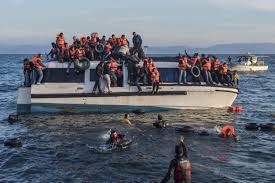
We are surrounded by people who have fled wars, violence and persecutions, some at the end of the Second World War, others after the Vietnam War and still others after conflicts in the Middle East going back to the end of the Second World War. Today we have people taking great risks to save their families, getting on unsafe boats at great cost and travelling in search of a welcoming land, often in vain.
 
Yet this movement of people is not new. The Bible tells the myths of the Patriarchs who were called out of their land in search of a promised place, of people being forcibly moved into exile and then finding their way out to continue the journey of hope and freedom. For the people of Israel sitting between great powers it was something most generations had, at some time, experienced; people coming and going in search of a better life.
 
It is no surprise that Jesus’ family also became refugees. Matthew tells this story to connect the coming of Jesus to the exile and exodus of the Jewish people from Egypt. In the type of Moses Jesus comes both as the prophet and Saviour of the people to bring them out of the exile they find themselves in at the hand of Herod and those who supported his regime. It is of importance in his story that the one who comes as the Messiah, the Anointed, is recognised as such through the familiar motif of exile and return.
 
Once again we have discernment coming in the moment of deep stillness via a dream. Joseph, not Mary, takes responsibility and recognises in his dreams the warnings and escapes to Egypt, a journey full of danger and threat. He discerns when it is time to return but also recognises it is not safe in his hometown and goes to Galilee. Joseph, the man on the move, saves and protects his family, and for Matthew, fulfils the prophecies about the Anointed One.
 
Once upon a time, it seemed we lived in a static world. We understood that the world and all in it had been created once and that was the way it would be. We understood we grew up in a particular place and would settle down and raise our family very near that place. We understood we would die and be buried in the same graveyard as our parents and siblings. We understood that creation as an event was finished and this world was  a finite entity with an end somewhere in the future. We understood we were Australians because that is where we lived and died, along with everyone else who looked like us.
 
Thanks to science and the theory of evolution, how this has changed. We now know we live in an ever expanding universe where creatures are becoming extinct and new ones being discovered; where our universe is just one among many and our planet, earth is no longer the centre of all that is. Change is not something we fear, but something organically central to our very existence. Most people here have a smart phone, an i-pad, a smart tv, a smart car, swipe on and off a smart transport system and talk to the families on the other side of the world for free using Skype. I can use my watch just the way Dick Tracy used to in the  ‘60’s comic strip. None of this existed 12 years ago.
 
In such a world we are being asked to make the journey with Jesus into exile and to discover the power it and the subsequent return brings to us. Instead of seeing those fleeing unsafe homelands as intruders into our world, we are being challenged to see them as the beacons of hope and freedom. Instead of seeing those who are living in exile in our countries as foreigners to be feared, we are being asked to welcome them, their faiths and cultures as they bring about renewal, diversity and vitality to our country and our religion. Instead of labelling others and consigning them to the margins we are being asked to open our heats and homes so that we all may continue to expand our vision of the world.
 
The Australian Bureau of Statistics released a study in 2015 showing that, far from being a burden on the country, humanitarian migrants (refugees) are amongst our most successful:
 
...While almost two-thirds of migrant taxpayers were migrants with a Skilled visa - reporting $26 billion in Employee income - Humanitarian migrants displayed greater entrepreneurial qualities and reported a higher proportion of income from their own unincorporated businesses and this income increased sharply after five years of residency. (Emphasis added.)
 
This is not what we hear and see and it is not what we want to hear and see. Yet those who come into our country as refugees bring great benefits to those of us already here. In a world of movement of people seeking safety and hope we all benefit.
 
Joseph takes is family into exile to wait out the despotic regime of Herod. While there he cared for his family and undoubtedly provided value to the community in which he lived. On return to his home country he goes to another region and sets up home and business and becomes involved in the community life of that place. He raises a family, all of whom we can assume played a role similar to his.
 
Jesus is the exception. He becomes both spiritual and political, something I suspect he modelled on his father too. Dreams and deep prayer became significant to his self-development and discernment of the will of God in his life. He lived out his life in a world he made his own while maintaining his deep connection with the world he left behind as God’s self expression.  Many failed to see him in such a way and ultimately he was killed for being the outsider they perceived him to be.
 
Yet his exile is the means of our exodus, our return to the home, the heart of God, we have never left. In this time of great movement, this is the challenge for us, to open our hearts to all in exile so they can find their return in our heart. As William Ricketts, the sculptor wrote, “All of life is one”, even those we fear. 

Monday, 7 March 2016

Rejoice With Me........

Luke 15:1-32
 
What is our appropriate response to life? How are we to respond to the events of an ordinary or a not so ordinary day? Life is the stuff that happens to us while we are waiting for life to arrive. In this place we often look past what is already here in search for something that is probably not going to come our way.
 
We strive for success, knowledge, power, wisdom, relationship, control and security, and find ourselves over an over again falling short of the goals we set or hope for  our selves.
 
We look around and see others who appear to have more than us and either give up or double up our efforts to achieve. Daniel Kahneman, Noble prize-winner, when asked what the formula for success is answers as follows: “Skill + luck = success”. To be a great success the formula goes this way, “Skill + great luck = great success”. If this is true, and experience and reading tells me, on all probability it is, then what is our response to life as we now experience it?
 
How do we live with the randomness at the centre of all existence? We couch randomness in the language of choice and causality and forget what happens is not necessarily about the choices we make or a cause we can easily identify. A whole range of seemingly unconnected factors come together in a perfect storm resulting in the situation we find ourselves in. Sometimes this is indeed a happy coincidence, other times it is disturbing and/or tragic.
 
We were watching the story of the development of the A380 super air liner recently, and in it they discussed the incidence in which one of the Rolls Royce engines caught on fire. The cause? A small drop of oil had fallen onto one of the rotors in the engine which, when it got hot, caught fire. A random event no one could saw happen. I noticed also that someone is suing Malaysian Airlines over the crash of MH370 because they, and I quote, " failed to ensure the aircraft safely reached its destination". 
 
I find it interesting people perceive life is not dangerous, vulnerable and random, that somehow we can render life harmless, controllable and predictable. Frankly I do not wish to live in such a world. How far have we come that we take the adventure out of life, that we see death as something we can in fact avoid, or at least put off, and not understand that it is death, the loss of life, that gives its essential value to life?
 
In each of the three stories Luke gives to Jesus, there is only one response: “Rejoice with me……….” In each of these stories someone has experienced misfortune. One the bad luck of losing a coin, another a sheep and yet another had a son leave home inappropriately. For those around them, each event would have been a catastrophic experience.
 
A shepherd has 100 sheep and loses one. It doesn’t seem like a big loss, he still has 99 doesn’t he? Why would he not be satisfied with what he had and put the loss down to something that just happens? Everyone loses a sheep now and then don’t they? Foxes, injury, illness or walking off the edge of the cliff? Why would you spend the time looking and leave behind the 99 you already have? Aren’t you putting what you have at risk? Who is watching over the ones left behind?
 
The theme is repeated with the woman, probably a widow, who loses one silver coin and has 9 remaining coins. She stops everything she has to do and pulls the place a part to chase down the elusive coin. She still has 9 but the washing stays unwashed, the kitchen untidied and the meals unprepared as she searches for 1, 1, coin.
 
The prodigal son, or the prodigal father, depending on how you see the story, reminds us that it is not just objects that get lost, but people, subjects of our love and relationships, who go missing. They or we make decisions separating us and leaving us searching for ways to reconnect and rediscover each other. This story is tragic. A headstrong young man demands his independence and embarrasses his father, and family, in the eyes of the villagers. He leaves, and his grand scheme unravels. and he finds himself returning home with his tail between his legs. His father, who has been waiting for his return, comes out to meet him. His brother doesn’t, and doesn’t want the lavish party his father throws. It seem unfair as he has been faithful and not ever had such a party thorn for him.
 
In all three stories, there is only one response to the onlookers, doubters and critics, “Rejoice with me…”
 
If our first response is to rejoice we will
  • Embrace and accept the situation. Not all situations end with us finding the precious item we are looking, but if it’s like my office, I always find something else I lost along time ago! This not a frivolous statement. If we reflect on our situation we will indeed find something we have lost, a new perspective on a situation, a greater understanding of what we already have, an awareness of new possibilities hidden in old hurts and frustrations, and more. And we are to rejoice in what we discover.
  • Recognise and value others. For those who lose objects, we may be tempted to respond, it’s only 1 sheep? What’s the point? But that 1 sheep is valued and has a value to the farmer and because of that the farmer is compelled to seek it out. In reference to the prodigal father, both son’s are of value and the older son is being challenged to see, not only what his brother means to his father, but what he also means to him, party or no party.
  • Shift from self to others. We often judge a situation from the outside, from what we value, from our life experience and dismiss what it means to others.

Rev Ben Gilmour, a friend of mine who is the minister at the Paddington Uniting Church in Sydney, has just returned from a trip to Jordan and writes:
“We are told by the media that refugees are bad people, just money hungry (economic) or possibly even terror agents. What I witnessed was families just like yours and mine, trying to make the best of it in the face of real terror.
The stark reminder that I can't get out of my head is that, I saw my sister in the face of refugees, my mum and my dad, my nephews and nieces, with all the human dignity and love and complexity that family brings here. There was no us and them, it was only us.”
 
Rejoice with me as we reclaim our humanity and begin to live out of the wonder and wealth found in everyday life. Rejoice with each other as we stand together against the random happenings that define and influence our existence. Rejoice with those like the Syrian refugees who are able to find hope in circumstances we often judge and critique without standing where they are standing.
 
Once we begin to rejoice we recognise the sufficiency of God in all situations and begin to see God at work where once we only saw reasons, causes, faults, failures and hopelessness. The power of rejoicing to unlock possibilities lies in its ability to get us to stop looking at I, me, mine; and to give permission for God, others and each other to blossom and celebrate who they, we are, what is possible and what is already here.
 

Rejoice with me…  

Saturday, 25 April 2015

ANZAC Day

On this ANZAC Day, let us not forget the horror of war and let us abandon the talk of glory, sacrifice and heroes. Let us abandon the myth that death and mangled bodies, lost lives and fractured families is the foundation on which our country was born. A country born in blood needs blood to continue to give it meaning, the blood of soldiers, refugees and the indigenous.

It is time to get real and find a new reason for our being or we will continue to need war and blood as a sacrifice for our sins.

Emotional Event
(War In Afghanistan 2)

(A reflection on the dehumanised nature of the modern video war where people do not exist as victims but only as collateral damage)

I read in the paper
just a couple of innocuous lines
planted almost hidden
camouflaged amongst a battalion of words
the following

“… the 2000 pound bomb that went astray would cause ‘ a significant emotional  event’ for any one within a square mile…”

then it all became clear to me
war is not about death
people do not die in war
they only suffer emotional events
collateral damage
insignificant
unnoticed
not even counted as a statistics
they were not even there
like the poor
victims of the Great Fire of London
on the illegal immigrants
on September 11
not dead
not included
forgotten
ignored
somehow responsible for their own misery
yes death is a significant emotional event
for all human beings
especially when hit by a
rogue
wayward
homeless

2000 pound bomb

Sunday, 23 December 2012

Mary - Refugee & Prophet


My favourite restaurant is a Vietnamese restaurant that does the best rice paper spring rolls in the world; well, maybe just in Australia, but they rock. The restaurant was started in the late '70's by a Vietnamese refugee who came to Australia with his family as boat people after the end of the Vietnam war. In conversations he has related the horror and anguish of that trip as he sought to give his family a new start, something he is forever grateful to Australia for. And so am I. The food is great.

Yet our country remains preoccupied with refugees, especially with those who wish to come to this country for a new start and are brought here by the so called 'people smugglers', 'entrepreneurs' who make their living by exploiting peoples' aspirations and hope for something better, a fairly popular way of making a quick buck in the first world as well.

"Of the 11,491 people seeking asylum in Australia in the period of 2010-11, 6,316 arrived by air. This means less than half arrived by boat. In fact, asylum seekers arriving by boat make up just 2.7% of the total migrant intake into Australia yet their perceived threat to the community is greatly exaggerated, with 72% of Australians concerned about asylum seekers coming to Australia by boat."(2)  This year 220 boats and just over 13,500 people have arrived.(2) If these figures are to be trusted, then the increase in numbers this year still equates to less than 8% of the total migrant intake to our country.

Not only have these people been exploited by the smugglers, they have also been exploited by the political parties, lobbyists and mainstream media for a range of dubious reasons, appealing to the fear, misunderstanding and disinterest of the average Australian. The various programs used to house and process them are less than humane, tent villages on remote islands while waiting a lengthy period to be processed, are to be condemned by fair minded people. 

We may at this time be marvelling at the inability of the American people to deal with the gun crisis in their country, but our phobia towards the ordinary people we call refugees is just as illogical and unnecessary.

Mary knew all about being a refugee.The moment she discovers she is pregnant she seeks refuge outside her village. She left her home and stayed away for 3 months in the home of Elizabeth in a hill town up and away from Nazareth.  It wasn't she was in mortal danger if she stayed in the village, but there would have been gossip, innuendo and a sense of fear if she did.  It was safer to be some where else until the smoke cleared and Joseph had had a chance to smooth things over with the families etc. She did go back, but not straight away.

If Mary knew about being a refugee, then so did Jesus. Even before he was born, Jesus was on the move to avoid controversy and bigotry. His was no romantic conception or birth.  Everything about Jesus conception and birth was clothed in the spectre of violence and rejection. Mary feared rejection and escaped to Elizabeth.  Later Mary and Joseph feared that Jesus would die in Bethlehem, (they hadn't gone home to Nazareth), under Herod's decree which saw a number of children, possibly related to them,die needlessly. Jesus was born with loss and grief, and grew up moving in its' shadow.

Yet when Mary meets with Elizabeth, Elizabeth (v. 41 - 45)  recognises the baby Mary is carrying is the promised Messiah. It can be suggested that Luke reports this meeting so as to connect John with Jesus by suggesting that John, in Elizabeth's womb, recognises the unborn Jesus as the Messiah. Regardless, this is the moment when both become aware of the mystical nature of the situation and develop an unbreakable bond as they give voice to the mystery within Mary.

Mary gives voice to her wonder in the words we call the Magnificat where Mary says,
‘My soul magnifies the Lord, 
   and my spirit rejoices in God my Saviour, 
for he has looked with favour on the lowliness of his servant.
   Surely, from now on all generations will call me blessed; 
for the Mighty One has done great things for me,
   and holy is his name. 
His mercy is for those who fear him
   from generation to generation. 
He has shown strength with his arm;
   he has scattered the proud in the thoughts of their hearts. 
He has brought down the powerful from their thrones,
   and lifted up the lowly; 
he has filled the hungry with good things,
   and sent the rich away empty. 
He has helped his servant Israel,
   in remembrance of his mercy, 
according to the promise he made to our ancestors,
   to Abraham and to his descendants for ever.’ 

In response to Elizabeth's acclamation of her faith, Mary announces the New covenant in her song of praise which makes clear the following:

v. 50 - the mercy of God
v.48  -  has become real to
v. 51 - reverse the hierarchy of power
v. 52 -  with a preference for the poor and the oppressed.

These words echo the intent of the Old Covenant found right throughout what we call the Old Testament (the texts which are a testament to the arrangement between God and his people before Jesus' birth).  Mary's song clearly marks the point in which the old has been fulfilled, and the new is here.  When, at the beginning of his ministry Jesus stands in the synagogue in Luke 4, he takes the words of Isaiah and uses words similar to those his mother had used at his conception:
‘The Spirit of the Lord is upon me,
   because he has anointed me
     to bring good news to the poor.
He has sent me to proclaim release to the captives
   and recovery of sight to the blind,
     to let the oppressed go free, 
to proclaim the year of the Lord’s favour.’ (Luke 4:18-19)

In the eyes and wisdom of Mary and Elizabeth, the covenant is alive and well!(v. 55)  God has not forgotten them, in fact, he has come to dwell among them in the form of Mary's boy child. It is true to say that the story of Israel owes much to the spirituality and mystical wisdom of women and this is another example. In the vision and subsequent example of Jesus, he lives up to his mother's insight and fulfils the promises made about him.

Mary speaks the truth in an incredibly difficult situation. And she returns to live out of that truth in the circumstances she found her self in. The challenge Mary gives to us is to take the words of her Song to be what they are, the full expression of the unbroken covenant between God and his people which we are to live out every day in memory of Christ, who instituted the new covenant with his body and his blood. Amen


Let us pray:

Lord;
As we come to this Christmas, 
let us celebrate the courage and fortitude,
Mary and women throughout the centuries have displayed.  
Let us not put barriers in their way.  
Let us embrace the mothers 
who today are mourning the loss of their children
in tragedies such as Sandy Hook 
and other forms of meaningless violence  - 
wars, bigotry, fear and misinformation.  
Let us recognise the difficulties of being a mother 
in a world where women are yet to be equal. 
Let us grasp the insight of Mary 
when she recognised the possibilities 
her unborn child brought to the world; 
and let us work to ensure that 
all have the chance to live to their full potential 
in our world, even here in Australia. Amen


Sunday, 20 February 2011

What's Happening To Our World?

If ever we were sure that the world we live in will always be the same, 2011 has provided some interesting insights to challenge us.

Devestating climatic activities, flood across most of our country, cyclones and fires in WA and similar events across the world pose the question: how do we cope with change?

People power uprisings for political change right across the Arab world including such places as Libya where the thought of such being possible was previously unheard of, poses the same question: how will we cope with a world that will be a very different one than that which we lived up until the end of 2010?

For us in the West the questions strike at our world view, our understanding of what is right and wrong, of where the foundations for our beliefs and practice are found. As the world becomes more multi-cultural through immigration, the arrival of refugees and the ease of travel, new ideas, beliefs and practices will live alongside, and at some tome, in some places, overshadow that which we took for granted.

Things like our religion, our belief system, our values and our way of life will, and if we are honest, have been challenged by these changes. This is inevitable, it is apart of living in an ever changing world. Yet, it is not that it is happening that matters most, as Tom Waits sings, "You can't hold back time", what matters most is how we respond to it.

Do we respond by emphasising our differences and walling up our fortresses to keep the changes out or do we embrace the challenge to be open to diversity, to listen to voices different to ours, to engage in dialogue with others looking for similarities and the space-in-between where we share our humanity?

It begins with us. Thomas Merton suggested that there will be no world peace unless each of us is at peace with ourselves and share that peace with another. It begins with us and fear is our enemy. We over come fear by facing it though engagement and dialogue, firstly within ourselves and the in the world.